 ultimate-guide
Is Celebrant Training Worth It? A Honest Guide
Table of Contents
- Is Celebrant Training Worth It? What You Need to Know
- Funeral Celebrant Training Courses: What's Involved
- Skills Required for Funeral Celebrants
- How to Become a Funeral Celebrant: A Practical Pathway
- Real Career Prospects in Celebrancy
- Common Misconceptions About Becoming a Celebrant
- Is This the Right Career Move for You?
- Frequently Asked Questions
Last Updated: 1 October 2026
Is Celebrant Training Worth It? What You Need to Know
Whether celebrant training is worth it depends entirely on what you're hoping to get from it. If you're considering this path, you're probably drawn to the idea of helping people during vulnerable moments, creating meaningful ceremonies that truly reflect someone's life. That's admirable. But before you invest time and money into training, you need honest answers.
At Mary Hopes Experienced Professional Funeral Celebrant, we work with families every week who've chosen a celebrant-led ceremony. We've also spoken with people considering the training who aren't sure if it's the right move. Some discover it's perfect for them. Others realise it's not, and that clarity before spending thousands of pounds is invaluable.
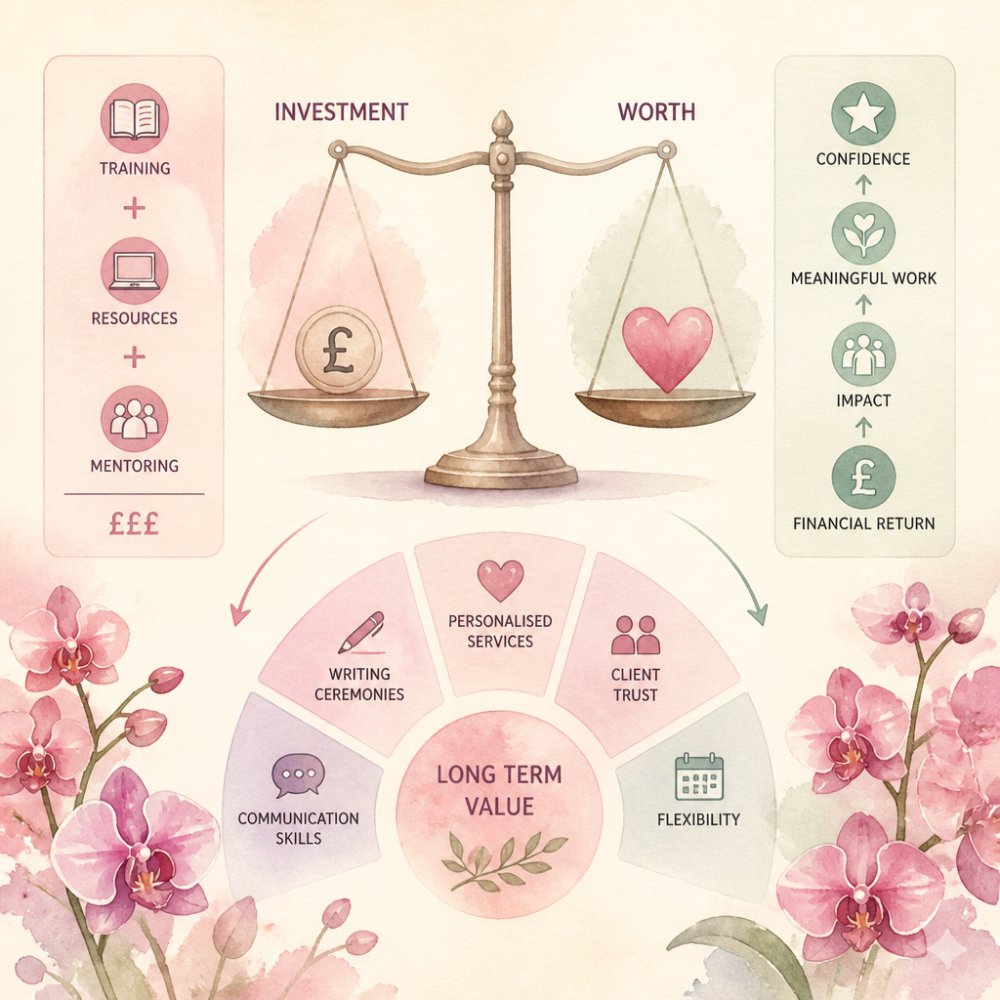
The question of whether celebrant training worth the investment comes down to three things: your genuine interest in the work itself, your realistic understanding of the career prospects, and whether you can afford both the training costs and the time it takes to build a client base. Let's work through each.
Funeral Celebrant Training Courses: What's Involved
Funeral celebrant training courses teach you how to conduct non-religious ceremonies that honour the deceased meaningfully. They cover ceremony structure, how to interview bereaved families, writing and delivery skills, and the practical logistics of working with funeral directors and crematoria.
Training typically combines online modules, practical workshops, and supervised practice ceremonies. You'll learn about different types of ceremonies, funerals, memorials, ash scatterings, and how to adapt your approach for different families and beliefs.
Time and Financial Commitment
The time commitment varies. Most courses run between three and six months if you study part-time, though some can be completed more quickly. You'll need to factor in study time, assignments, and practical elements where you conduct real ceremonies under supervision.
Financial costs depend on the provider. Training organisations charge different rates, and you'll want to research what's included. Beyond tuition, consider costs for professional insurance, membership with relevant bodies, and marketing materials once you're qualified. Building your business takes time, many new celebrants don't see meaningful income for at least a year.
Accreditation and Qualifications
The Level 3 Diploma in Funeral Celebrancy (QCF) is the highest national qualification available in this sector. It's worth checking whether any training you're considering leads to this qualification, as it carries real weight with funeral directors and families. Accreditation matters because it signals you've met recognised standards and understand the responsibilities involved.
Not all training leads to formal qualifications, so ask directly. Some providers offer certificates rather than diplomas. There's a difference, a diploma is regulated and nationally recognised, whereas a certificate is specific to that organisation. If you're serious about building a sustainable career, the diploma route is stronger.
Skills Required for Funeral Celebrants
You need genuine listening skills, not just hearing words, but understanding what families are really saying about their loved one. You'll spend hours interviewing people at their most vulnerable, and your ability to draw out meaningful details determines whether the ceremony feels authentic or generic.
Writing ability matters too. You're creating something that will be read aloud, often by you, sometimes by family members. The language needs to flow, feel natural, and capture someone's life in a way that resonates. This isn't academic writing, it's more like storytelling.
Public speaking is essential. You'll conduct ceremonies in front of groups, often people you've never met, in emotionally charged situations. Confidence, clarity, and the ability to handle unexpected moments (a family member becoming overwhelmed, technical failures) are crucial. If public speaking terrifies you, this work will be genuinely difficult.
You also need emotional resilience. You're regularly in spaces of grief. You won't be grieving yourself, you're there to support others, but you will absorb sadness. Some people find this deeply rewarding. Others find it draining. Knowing which you are matters before you commit.
Organisational skills are underrated but essential. You're managing multiple conversations with families, liaising with funeral directors, coordinating with venues, managing timings. Chaos during a ceremony reflects on you and distresses families.
How to Become a Funeral Celebrant: A Practical Pathway
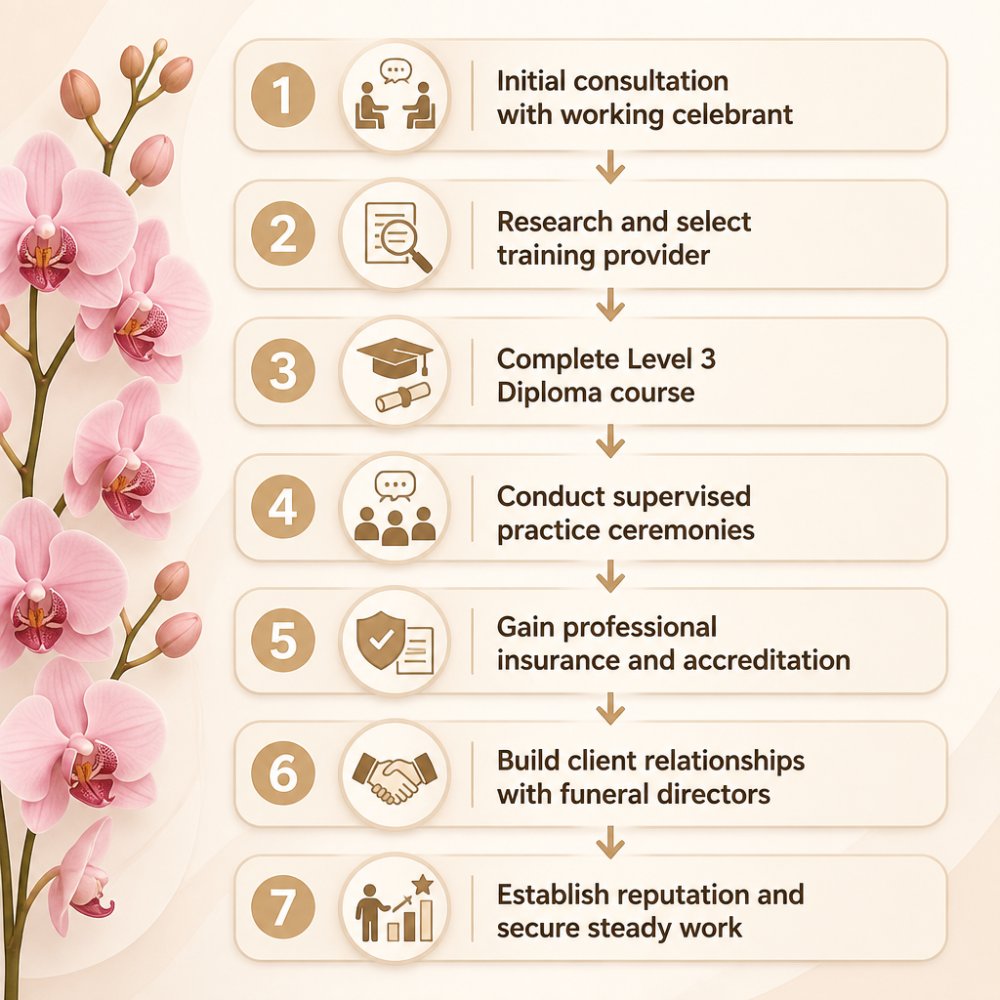
The route to becoming a funeral celebrant starts with honest self-assessment. Before enrolling in training, speak with working celebrants about what the job actually involves. Many will give you their time if you're genuinely considering it. This isn't about being sold on the idea, it's about understanding the reality.
Once you've decided to proceed, research training providers carefully. Look at their curriculum, whether they lead to the Level 3 Diploma, what ongoing support they offer, and whether they have partnerships with funeral directors. Some providers have better networks than others, which affects how easily you'll find work after qualifying.
Complete your training and gain your qualification. During training, you'll conduct supervised practice ceremonies, real funerals with real families. This is where you'll discover whether you actually enjoy the work or whether the theory appealed to you more than the practice.
Building Your Client Base and Finding Work
After qualifying, you'll need to build relationships with funeral directors. They're the primary source of referrals for most celebrants. This means visiting local funeral homes, introducing yourself, explaining your approach, and demonstrating that you're reliable and professional. It takes time, typically several months before you're regularly receiving referrals.
Some celebrants also market directly to families through websites and social media. This works, but it's slower than funeral director relationships. You're competing with established celebrants and clergy who already have visibility.
Many new celebrants start by conducting ceremonies for lower fees to build experience and gather testimonials. This is a reality of starting out. You need families willing to book you, and when you're unknown, competitive pricing helps. Once you have a track record and positive feedback, you can increase your fees.
The work itself is often irregular, especially initially. You might conduct one or two ceremonies in a week, then nothing for a fortnight. This unpredictability makes it difficult as a sole income source. Many celebrants combine it with other work, at least for the first year or two.
Real Career Prospects in Celebrancy
Let's be direct: celebrancy is not a path to significant wealth. Most celebrants earn a modest living, enough to make it worthwhile if it's your primary work, but not enough to become wealthy. The income depends on how many ceremonies you conduct and your fee per ceremony.
Demand for celebrants is growing. More families are choosing non-religious ceremonies, and this trend is expected to continue. That's positive for career prospects. However, it's also attracting more people into the profession, so competition is increasing.
The most successful celebrants are those who build strong reputations with funeral directors and create ceremonies people genuinely value. Word-of-mouth matters enormously. A celebrant who's known for creating deeply personal, moving ceremonies will have steady work. One who's seen as generic will struggle.
Some celebrants specialise, perhaps focusing on children's funerals, or creating particularly artistic ceremonies, or working with specific communities. Specialisation can help you stand out and potentially command higher fees.
The work is sustainable long-term if you enjoy it. Many celebrants continue well into their later years because the work is flexible and deeply meaningful. It's not a career with the same progression as other professions, you don't become a "senior celebrant" with significantly higher earnings, but it offers genuine purpose and flexibility.
Common Misconceptions About Becoming a Celebrant
Many people assume celebrancy is easier than it actually is. They imagine conducting a few ceremonies and building a comfortable living quickly. The reality is slower. Building a sustainable income typically takes one to two years of consistent work.
Another misconception is that you need to be naturally charismatic or theatrical. Some celebrants are naturally outgoing; others are quieter and more reflective. What matters is authenticity and genuine care for the families you serve, not performance ability.
People also sometimes think celebrant training qualifies you for other work, perhaps speaking engagements, corporate events, or other ceremonies. Some crossover exists, but celebrant training is specifically designed for funeral work. If you're hoping to pivot into other areas, you'll need additional training.
There's also a misconception that you can work entirely independently. In reality, you're dependent on funeral directors for most of your referrals.
Is This the Right Career Move for You?
Ask yourself some hard questions. Do you genuinely enjoy being around grief, or does the idea of helping people appeal to you in theory but feel uncomfortable in practice? Are you comfortable with irregular income initially? Can you handle rejection if families choose another celebrant? Are you willing to invest time building relationships with funeral directors before seeing significant income?
Frequently Asked Questions
Do you need a qualification to be a funeral celebrant?
Whilst there's no legal requirement to be a funeral celebrant in the UK, holding a recognised qualification like the Level 3 Diploma in Funeral Celebrancy (QCF) demonstrates your commitment and competence. Most funeral directors prefer working with qualified celebrants, and families often feel more confident knowing you've completed formal training. A qualification gives you credibility and opens doors to more consistent work.
How long does celebrant training actually take?
Training timescales vary depending on the course provider and whether you study full-time or part-time. Most comprehensive training programmes take between 6 to 12 months to complete. You'll need to factor in study time, practical placements, and assessments. After qualification, building a sustainable client base typically takes another 12-24 months as you establish relationships with funeral directors and develop your reputation.
What are the main skills required for funeral celebrants?
Successful funeral celebrants need strong listening skills to truly understand the deceased's life story, excellent communication abilities to articulate meaningful tributes, emotional resilience to handle grief without becoming overwhelmed, and genuine empathy for bereaved families. You'll also need organisational skills, the ability to work under pressure, and confidence speaking in front of groups. Perhaps most importantly, you need authentic respect for people from all backgrounds and beliefs.
Can you make a reliable living as a funeral celebrant?
Many celebrants do build sustainable careers, but it requires patience and strategic relationship-building. Income varies based on your location, how many ceremonies you conduct monthly, and whether you diversify into related services like wedding or naming ceremonies. Some celebrants work part-time alongside other roles initially. Success depends on building strong connections with local funeral directors, maintaining excellent service standards, and actively marketing yourself to bereaved families seeking a personal touch.